Building Above: Expanding INTEGRIS Heart and ICU Hospitals Without Disruption
Jan 29 2017
Challenge
Constructing a six-story, 206,000-SF heart and ICU hospital above an active parking garage and connecting it to the main hospital via a 10-story tower required detailed planning and precise execution to ensure zero disruptions to hospital operations. The existing garage could not support the vertical loads of the new construction, requiring a foundation solution to safely transfer the weight of the hospital and connector tower without disrupting ongoing hospital operations.
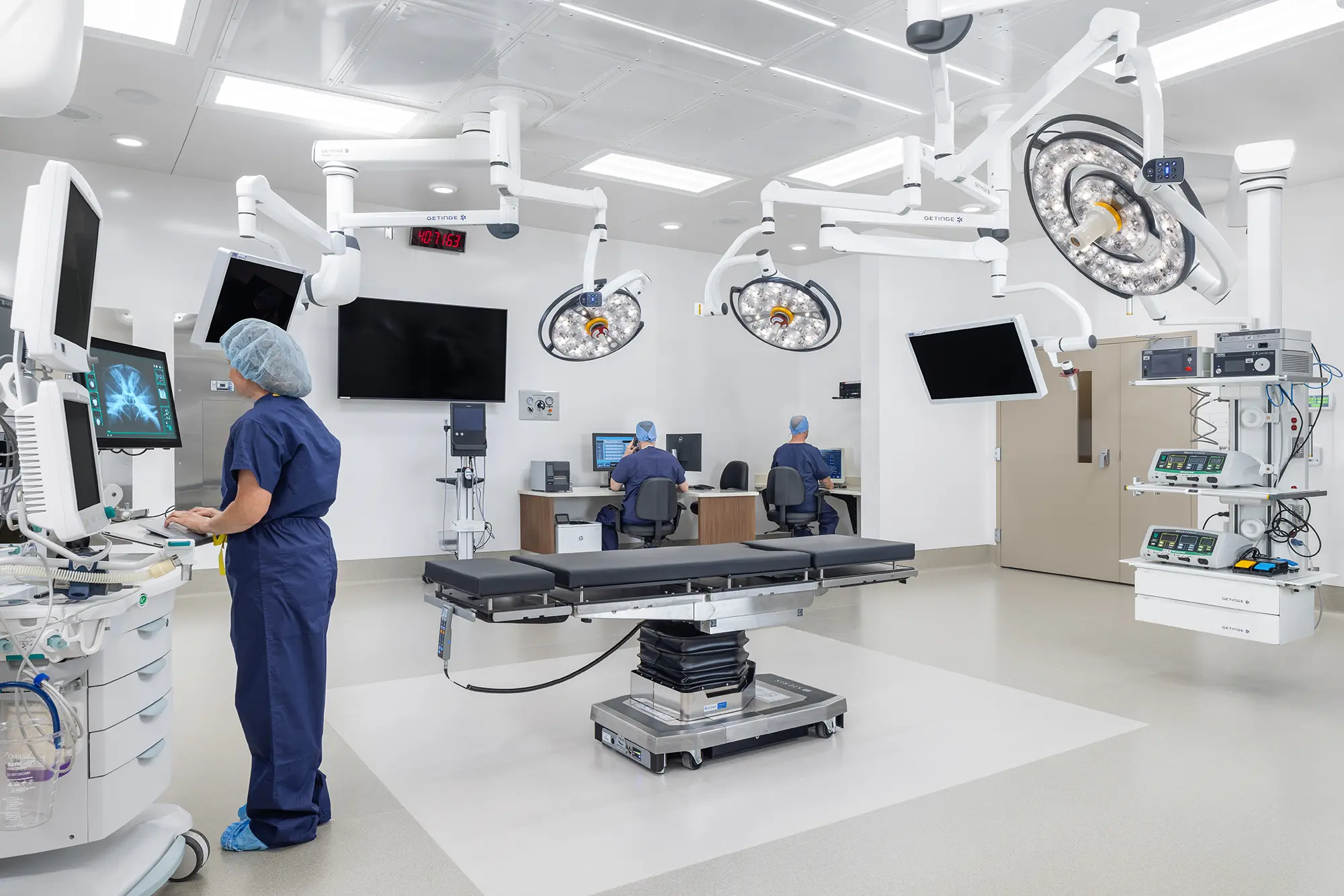
The 1960s-era structure had 12-foot floor-to-floor heights, limiting space for modern overhead HVAC systems. New code requirements stipulate precise air exchange and temperature control, particularly in Cardio Vascular Operating Rooms (CVORs) where surgeons require room temperatures to drop to 50°F for organ preservation and then rise gradually to 68–70°F at 1°F per minute.
Solution
Flintco installed 173 micropiles to transfer the connector tower load through the existing garage safely and placed 4-foot-deep post-tensioned beams cantilevered over the active loading dock. Fourteen air handlers—including four dedicated to CVORs—along with extensive MEP systems, were coordinated to fit within the low-floor constraints.
Early BIM and HVAC design-assist ensured that all systems could fit within the overhead space and operate precisely. The team used Faro and NavVis laser scanners to capture as-built conditions and integrated them into Revit for millimeter-accurate tie-in verification. To provide real-time documentation and streamline inspections, the team leveraged StructionSite. Sequenced construction allowed micropiles, shear walls, and MEP installation to proceed without disrupting patient care or hospital operations.
Result
The Flintco team successfully executed the structural engineer’s design, completing the concrete structure ahead of schedule. The expansion was delivered without interrupting hospital operations, allowing patients, staff, and visitors to move safely across the campus. The new tower was constructed to accommodate additional floors and support the facility’s future growth.
RELATED ARTICLES
You Bring The Vision.
We’ll Make It Happen.