Sequencing Success: Keeping Construction on Track Amid Unforeseen Delays
Dec 19 2025
Challenge
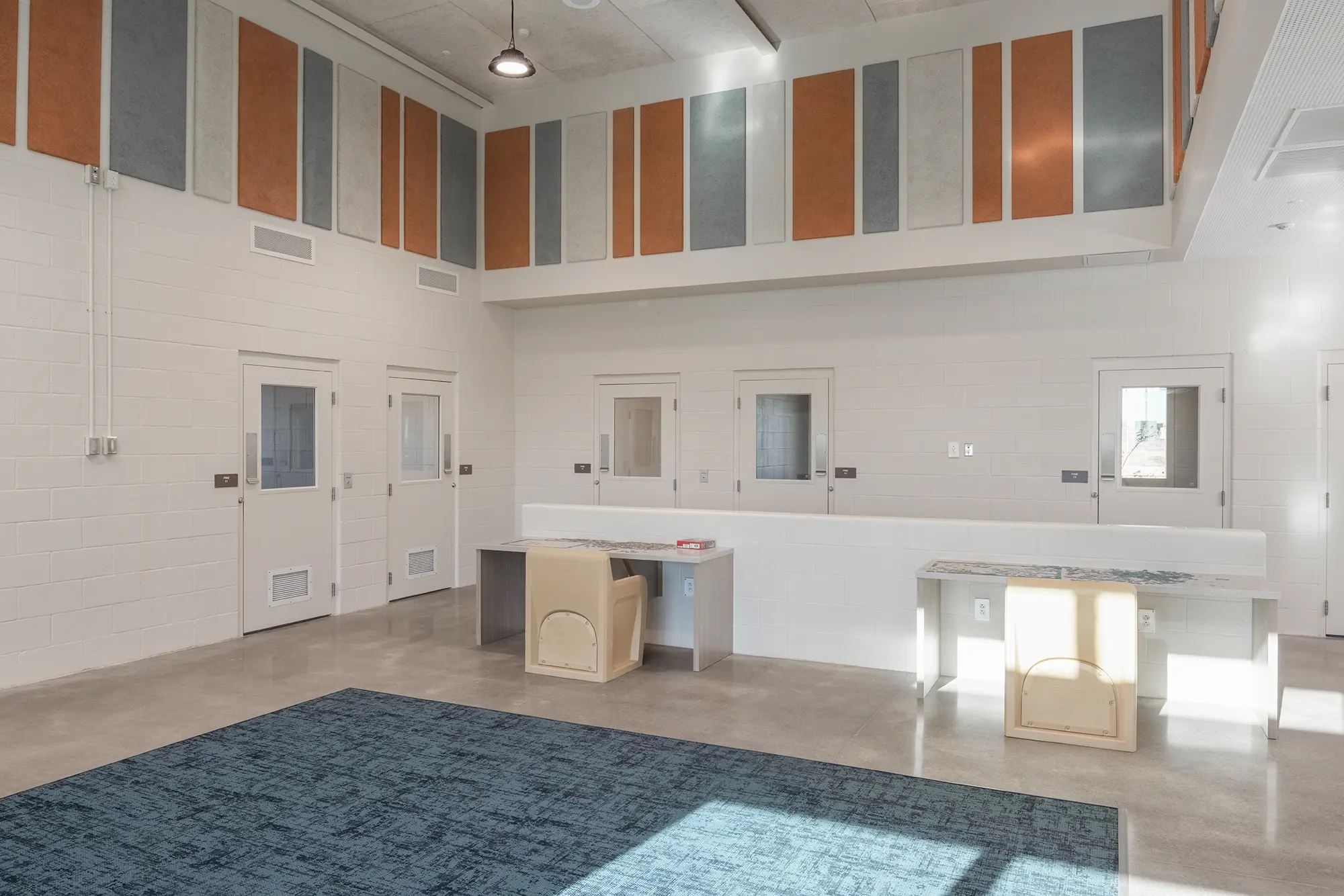
Flintco faced the complex task of constructing eight new buildings across an 80,000 SF campus while maintaining uninterrupted operations at Oklahoma’s only secure-care juvenile rehabilitation facility. The design-build project required constant coordination with Oklahoma Juvenile Affairs (OJA) to ensure 144 residents maintained secure access to housing, visitation, dining, education, and recreation throughout construction.
OJA was unable to vacate the existing spaces as initially planned to maintain resident living areas. Limited space within the secure perimeter also limited the number of buildings that could be constructed concurrently. In addition, OJA requested a complete redesign and relocation of the Intake Building, and later acquired an adjacent parcel of land, which required relocating a portion of the project parking—introducing additional design coordination and site planning complexity.
Solution
Leveraging the collaborative advantages of the design-build delivery method, Flintco worked closely with the design team and OJA to re-evaluate campus sequencing and develop a revised execution strategy. What was initially planned as a two-phase approach was thoughtfully restructured into five phases, allowing construction to continue while accommodating occupied facilities and perimeter security.
Construction began with the Intake Building, as no other work could proceed until it was operational. Flintco issued an early site work package for the Intake Building and parking relocation, enabling construction to begin while design revisions were still in progress, maintaining critical path momentum and minimizing schedule impacts. The Dining Hall was strategically separated from the remaining buildings and delivered as an independent scope, allowing work to proceed without impacting its original schedule.
Lean 2.0 principles guided daily operations, including detailed phase-planning sessions and daily huddles, to continuously adjust sequencing as conditions changed. Ten-foot temporary security fencing separated active construction zones from resident areas, while controlled movement paths and daily coordination with OJA staff ensured residents remained completely apart from construction activities, and workers remained safe within the secure perimeter.
Result
Proactive sequencing and Lean planning enabled Flintco to recover the schedule and successfully deliver all buildings on time, including seven cottage-style housing units, a dining hall, warehouse, offices, and support facilities. The project achieved zero recordable injuries, maintained resident security, and ensured uninterrupted facility operations throughout construction.
RELATED ARTICLES
You Bring The Vision.
We’ll Make It Happen.